
The most common question after a floor goes down is not about color or gloss. It is "when can I use it?" And the most common way to ruin a good floor is to answer that question by touching the surface, deciding it feels hard, and parking on it.
A floor that feels hard is not a floor that is cured. This guide gives the real numbers for each type of coating, what each stage actually means, and the conditions that move those numbers in either direction.
Dry, recoatable and fully cured are not the same thing
A two-part coating goes through several stages, and each one unlocks something different. Knowing which stage you are at is what keeps you from sanding off a coat you just paid for.
- Working time. How long mixed product stays usable in the bucket and on the floor before it starts to set. Miss it and the coating stops leveling.
- Recoat window. When the next coat can go on, and just as important, how long you have before it can no longer bond without sanding.
- Foot traffic. Light, careful walking. Clean socks or clean shoes, not dragging a toolbox.
- Vehicle traffic. Parking a car or rolling heavy equipment across it.
- Full cure. The coating reaches its full hardness and chemical resistance. For every coating in this guide that is about 7 days at 68°F.
Cure times by coating at 68°F
These are the figures from each product's technical data. Working times are measured at 70°F and cure times at 68°F. Anything warmer shortens them and anything cooler stretches them.
| Coating | Working time | Recoat | Foot traffic | Vehicles | Full cure |
|---|---|---|---|---|---|
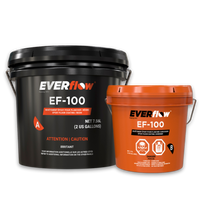
| EF-100 standard epoxy | 30 to 40 min | 18 to 24 hr | About 1 day | About 2 days | About 7 days |
| LTX-100 high-flow epoxy | 20 min | Dry to touch in about 5 hr | About 16 hr | 3 days | 7 days |
| EF-150 fast-cure epoxy | n/a | 6 to 8 hr | 8 to 12 hr | About 24 hr | About 7 days |
| EF-155 super-fast-cure epoxy | About 10 min | 2 to 4 hr | 6 to 8 hr | About 24 hr | About 7 days |
| EF-Masterflow metallic epoxy | 30 to 40 min | 18 to 24 hr | About 1 day | About 2 days | About 7 days |
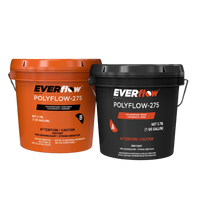
| EF-275 polyaspartic topcoat | 20 to 25 min | 2 to 4 hr | 4 to 8 hr | About 1 day | About 7 days |
| EF-290 high-solids polyaspartic | 15 to 20 min | 2 to 4 hr | 3 to 6 hr | About 1 day | About 7 days |
| EF-285 aliphatic polyurea | n/a | 2 to 4 hr | 4 to 8 hr | About 1 day | About 7 days |
| EF-301 polyurethane finish | n/a | n/a | About 1 day | About 2 days | About 7 days |
Two patterns jump out. First, the topcoats cure far faster than a standard epoxy base, which is why a polyaspartic topcoat can return a space the same day. Second, no matter how fast a coating gets to foot traffic, full cure still takes about a week. Fast cure buys you an earlier start, not an earlier finish line.
The recoat window: the one deadline you cannot miss
Most people worry about coating too soon. The more expensive mistake is coating too late.
With EF-100, the next coat goes on after 18 to 24 hours, and it needs to go on within 48 hours. After that, the surface has hardened past the point where a new coat grips it well, and you have to sand the previous coat before recoating. That is a full extra day of labor on a floor that was otherwise on schedule.
So plan the whole system before you open the first kit. If a weekend or a supply run could stretch the gap past 48 hours, either move the start date or budget for a sanding pass.
What speeds cure up or slows it down
Temperature
Heat is the biggest single factor. The pot life of LTX-100 shows how hard it swings: 40 minutes at 41°F, 20 minutes at 68°F and just 10 minutes at 86°F. A hot garage in July and a cold one in January can feel like two different products.
The slab, not just the air
The concrete temperature matters as much as the air around it. The slab should be at least 3°C, about 5°F, above the dew point. Below that, moisture can condense on the surface and interfere with the bond and the finish.
Cold weather
Standard epoxies slow down sharply in the cold. Fast-cure epoxies are built for it. EF-150 and EF-155 cure on substrates down to 32°F and can be applied from 32°F to 86°F, with the best workability at 50°F or warmer and ambient humidity under 85%.
Leaving it in the bucket
Epoxy cure gives off heat. A full mixed kit sitting in a pail traps that heat, which speeds the reaction up, which makes more heat. That is why the product guidance is to pour immediately after mixing. Mixed product left in the bucket can set far faster than the published working time.
When you can actually use the floor
Walking on it
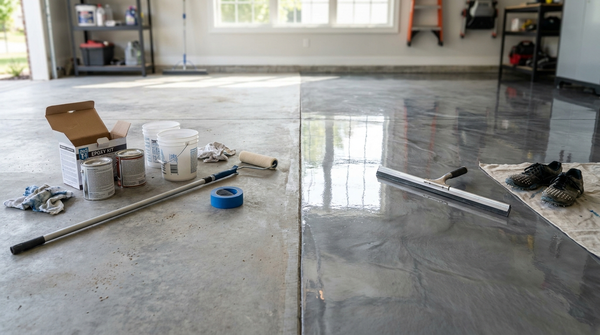
Start with light, careful foot traffic at the time listed above, in clean socks or clean shoes. Hold off on moving furniture, rolling tool chests and anything that drags or scratches until the floor has had more time.
Parking on it
Give a standard epoxy about 2 days before vehicles, and LTX-100 3 days. Fast-cure epoxies and polyaspartic topcoats reach vehicle traffic in about a day. Even then, rubber tires can mark a polyaspartic coating through plasticizer migration, and quick stops or starts can leave rubber marks, so put mats under parked tires where that matters.
Cleaners and chemicals
Full chemical resistance only arrives with full cure. For the first week, keep harsh cleaners, solvents and chemical spills off the floor, and clean up anything that does land on it quickly.
Choosing a coating by how much downtime you have
- Standard schedule, maximum durability. EF-100 or the higher-strength LTX-100 as the base, with a topcoat on top.
- Tight timeline or a cold space. EF-150 recoats in 6 to 8 hours and cures down to 32°F.
- Same-day return to service. A super-fast-cure epoxy base followed by a polyaspartic topcoat like EF-275, which takes foot traffic in 4 to 8 hours.
Whatever you choose, cure time is only as good as the slab underneath it. A coating over a damp or poorly prepared slab can fail no matter how carefully you wait. Read moisture testing before epoxy and why epoxy floors peel before you start, and see polyaspartic vs epoxy for how the base and topcoat work together.
Frequently asked questions
How long after epoxy can I walk on it?
At 68°F, a standard 100% solids epoxy like EF-100 takes light foot traffic in about a day. Fast-cure EF-150 is ready in 8 to 12 hours, and polyaspartic topcoats in 4 to 8 hours. Cooler temperatures stretch all of these times.
How long before I can park a car on a new epoxy floor?
About 2 days for a standard epoxy like EF-100 and 3 days for LTX-100 at 68°F, and about 24 hours for fast-cure epoxies and polyaspartic topcoats. Put mats under tires at first, since rubber tires can mark polyaspartic coatings.
How long does epoxy take to fully cure?
About 7 days at 68°F for every coating in this guide. The floor feels hard well before then, but it does not reach full hardness and chemical resistance until the full cure is complete.
Can I apply epoxy in a cold garage?
Standard epoxy slows down sharply in the cold. Fast-cure epoxies like EF-150 are built for it and cure on substrates down to 32°F, with the best workability at 50°F or warmer. Keep the slab at least 3°C, about 5°F, above the dew point.
SIGUE LEYENDO
Más guías de los profesionales de Latux
Conocimiento que construye mejores pisos.
Explora la biblioteca completa de guías, tutoriales e información de producto para contratistas.