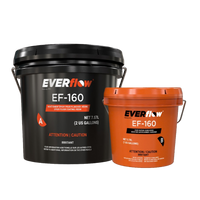

MÁS EN METALLIC SYSTEMS
Ver todos los productos


Solids
100%
Compressive
18,400 psi
VOC
Under 30 g/L
Rendimiento
150 to 481 sq ft per 3 gal kit, build dependent
- Contacto indirecto con alimentos Cumple requisitos para contacto indirecto con alimentos
- LEED v4, bajas emisiones Método SCAQMD 304-91
- Bajo COV Según la ficha técnica
- Ensayado según ASTM Datos completos en la ficha técnica
- Empresa familiar desde 2004 Más de 20 años en el oficio
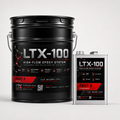
LTX-100 | High-Flow Epoxy Floor Coating Kit (3 Gal) | 100% Solids, 18,400 PSI
Proveedor:
Latux Epoxy & Coatings
SKU:
LTX-100
Rendimiento:
150 to 481 sq ft per 3 gal kit, build dependent
Disponibilidad:
En stock
Tipo de producto:
Epoxy Floor Coatings
$249.00
SOLICITAR COTIZACIÓN
Hable con su representante Latux para obtener el mejor precio, flete y tiempo de entrega.
LTX-100 is the coating Latux put its own name on, a professional 2-component, 100% solids epoxy engineered for high-build placement over prepared concrete. It cures to 18,400 psi in compression, roughly three times a standard 100% solids floor epoxy, yet it stays fluid enough to release its own air and pull itself flat into a single seamless plane. Flow is normally a trade against strength. Here you get both.
18,400
PSI
Compressive strength
100%
SOLIDS
No shrinkback, full build
<30
G/L VOC
Low odor, occupied spaces
290
PSI ADHESION
Fails in the slab, not the line
Why crews specify it
Strength that changes the spec
18,400 psi compressive under ASTM D-695, 14,430 psi flexural and 8,400 psi tensile, with 80 Shore D hardness and only 28 mg lost to Taber abrasion. This is a floor you can put pallet jacks, jack stands and vehicles on without a conversation about it.
One coating, three very different jobs
Low mixed viscosity gives a clear metallic pour the long open flow it needs to develop movement, carries a full refusal flake broadcast without starving the bond coat, and still lays down fast as a straight pigmented industrial floor. One product on the shelf instead of three.
What you spread is what you keep
Solvent borne coatings lose volume as the carrier flashes off, which is why a specified build so often measures short on the floor. At 100% solids there is nothing to lose. A 16 mil pour cures at 16 mils, so your takeoffs stop drifting and your mil gauge tells the truth.
Bonds harder than the concrete
Pull-off adhesion measures 290 psi under ISO 4624, at or above the capacity of sound concrete. On a slab ground to CSP 2 or 3, the weak link is the substrate rather than the coating line, which is exactly where you want it.
Levels itself, holds the gloss
The material releases entrained air, wets into the profile and closes its own squeegee lines and roller stipple. You get a high gloss single plane finish with no joints to collect soil, and 2.4% elongation to absorb normal slab movement instead of cracking over it.
Coverage you can plan a job around
One 3 gallon kit runs 481 sq ft as a 10 mil primer pass, 301 sq ft at a 16 mil standard build, 241 sq ft for a 20 mil metallic pour, and 150 sq ft at the 32 mil maximum. Add 10 to 20 percent on open or freshly shot blasted concrete.
Technical specifications
| PHYSICAL AND CHEMISTRY | |
| Solids content | 100% by volume |
| Chemistry | Modified epoxy resin and modified amine, 2-component |
| Finish | High gloss |
| Color | Clear, tintable with metallic and pearlescent pigment |
| Mix ratio | 2 parts A to 1 part B by volume |
| Pigment loading | One 160 g pod per 3-gallon kit |
| Viscosity | Part A 120 to 130 KU |
| Specific gravity | About 1.09 mixed |
| MECHANICAL | |
| Compressive strength | 18,400 psi (ASTM D-695) |
| Flexural strength | 14,430 psi (ASTM D-790) |
| Tensile strength | 8,400 psi (ASTM D-638) |
| Elongation at break | 2.4% (ASTM D-638) |
| Hardness | 80 Shore D (ASTM D-2240) |
| Taber abrasion | 28 mg loss (ASTM D-4060) |
| Pull-off adhesion | 290 psi to prepared concrete (ISO 4624) |
| APPLICATION AND CURE | |
| Coverage | 150 to 481 sq ft per 3-gallon kit, depending on build |
| Build range | 10 to 32 mils per coat |
| Working time | 20 min at 68 degrees F, 40 min at 41, 10 min at 86 |
| Mixing | 3 minutes, stir stick or low speed drill and paddle |
| Cure at 68 degrees F | Dry to touch 5 hr, foot traffic 16 hr, vehicles 3 days, full cure 7 days |
| Recoat window | Within 4 days at 75 degrees F, or abrade first |
| Surface prep | Diamond grind or shot blast to ICRI CSP 2 to 3 |
| Apply temperature | 40 to 95 degrees F, humidity at or below 80% |
| Topcoat | UV-stable polyaspartic or urethane for sunlit areas |
| HANDLING AND STORAGE | |
| VOC | Under 30 g/L mixed |
| Flash point | Part A 165 degrees F, Part B 192 degrees F |
| Shelf life | 12 months unopened, store 41 to 95 degrees F |
| Documents | TDS, Application Guide and Safety Data Sheets for Part A and Part B |
In the kit
- 3-gallon kit: 7.57 L clear resin (Part A) plus 3.78 L hardener (Part B)
- Pre-measured 2 to 1 mix ratio by volume
- Clear base, tintable with Latux metallic and pearlescent pigment, one 160 g pod per kit, sold separately
Before you pour
Concrete must be cured 28 days and ground to an ICRI CSP 2 to 3 profile, with moisture under 6 percent, internal humidity below 85 percent to ASTM F2170 and vapor emission below 3 lb per 1,000 sq ft per 24 hours to ASTM F1869. If the slab fails either moisture test, install a moisture vapor barrier primer and let it cure first. Coating over an active vapor drive is the most common cause of blistering on an otherwise sound floor.
Pairs with
Build the full system with a Latux moisture vapor barrier where the slab needs one, metallic and pearlescent pigment pods for colour, a UV-stable polyaspartic topcoat for gloss retention and UV protection, and a flat squeegee sized for the pour.
Ordering
Ships free in the US. Add your kit to the cart, then add pigment and a topcoat in a click. Running a large job or need contractor pricing? Message your Latux rep and we will set you up.
Formulated for professional installers and supported by Latux.
⚠ California Proposition 65: This product can expose you to chemicals including epichlorohydrin and bisphenol A, known to the State of California to cause cancer and birth defects or other reproductive harm. www.P65Warnings.ca.gov
Frequently Asked Questions
How much floor does one LTX-100 kit cover?
A 3 gallon kit covers 150 to 481 square feet depending on the build you place. At a 16 mil standard build it runs about 301 square feet, at 20 mils for a metallic pour about 241 square feet, and at the 32 mil maximum single pass about 150 square feet. Because LTX-100 is 100 percent solids there is no carrier to evaporate, so applied thickness and cured thickness are the same number and coverage stays predictable. Deduct for profile, porosity and waste, and add 10 to 20 percent on open or freshly shot blasted concrete.
How strong is the cured floor?
18,400 psi in compression under ASTM D-695, 14,430 psi flexural under ASTM D-790 and 8,400 psi tensile under ASTM D-638, with 80 Shore D hardness and 28 mg loss on Taber abrasion. Adhesion to prepared concrete measures 290 psi under ISO 4624, which is at or above the pull off capacity of sound concrete, so on a correctly profiled slab a bond failure happens in the concrete rather than at the coating line. Tensile elongation of 2.4 percent leaves enough give to absorb normal slab movement.
How long is the working time, and when can I use the floor?
Pot life in the pail is 20 minutes at 68 degrees F, 40 minutes at 41 degrees F and 10 minutes at 86 degrees F. Dry to touch is about 5 hours at 68 degrees F and light foot traffic returns at about 16 hours. Heavy traffic and vehicle loading at 3 days, full chemical cure at 7 days. Epoxy cure is exothermic, so a full 3 gallon mix heats itself and will accelerate well past those figures if it stands in the bucket. Get it onto the floor immediately after mixing.
Can I use LTX-100 for a metallic or a flake floor?
Yes, it is built for both. The low mixed viscosity gives a metallic pour the long open flow it needs to develop pigment movement before set, and it carries a full refusal flake or quartz broadcast without starving the bond coat. For metallics, place at around 20 mils. For flake, use it as the bond coat at about 16 mils, broadcast into the wet film, and stay off the surface until it is dry through.
Can I use LTX-100 outdoors or in sunlight?
Not on its own. Like all epoxies it will amber under prolonged UV exposure. For exterior work, sunlit interiors or anywhere colour stability matters, protect it with a UV stable pigmented coating or an aliphatic urethane or polyaspartic topcoat.
What surface prep does LTX-100 need?
Concrete cured at least 28 days, diamond ground or shot blasted to an ICRI CSP 2 to CSP 3 profile, moisture content below 6 percent, below 85 percent internal relative humidity when tested to ASTM F2170 and below 3 lb per 1,000 sq ft per 24 hours when tested to ASTM F1869. The slab must be free of oil, grease, curing compound, laitance and dust. Repair and detail cracks and joints before coating, because slab movement telegraphs through a finished system.
Do I need a moisture vapor barrier first?
Only if the slab fails the moisture tests. If vapor emission or internal humidity exceeds the limits above, install a dedicated moisture vapor barrier primer and let it cure before placing LTX-100. Coating over an active vapor drive is the most common cause of osmotic blistering and delamination on an otherwise sound floor.
What is the mix ratio, and can I mix a partial kit?
2 parts A to 1 part B by volume. You can mix a partial batch as long as you measure by volume rather than by eye, because off ratio material will not reach full cure and cannot be corrected afterward. Pre-mix Part A on its own for a minute, combine in a clean vessel, then mix for a full 3 minutes with a stir stick or a low speed drill and paddle, scraping the sides and bottom of the pail at least twice. Unmixed material clinging to the wall is the usual source of soft spots.
Can I tint LTX-100?
Yes. The base is clear and tintable. Add pigment to Part A only and disperse it completely before Part B goes in. Latux metallic pigment pods are pre-measured for a full 3 gallon kit.
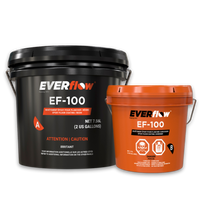
How does LTX-100 compare to EF-100?
Both are 100 percent solids two component epoxy floor coatings, and both self level. LTX-100 is the higher specification of the two: 18,400 psi compressive against 6,200 psi for EF-100, and under 30 g/L VOC against under 50 g/L. Choose LTX-100 where load, abrasion and long term durability drive the decision, or where a metallic pour needs a long open flow. EF-100 remains the value workhorse for straightforward garage and shop floors.
What protective equipment do I need?
Chemical splash goggles, chemical resistant gloves in nitrile or butyl rubber, and skin covering protection. Natural rubber latex is not suitable, because epoxy resins penetrate it. Part B is corrosive and causes severe skin burns and eye damage, so add a face shield when handling it and keep an eyewash station and safety shower in the work area. Ventilate during application and cure. Read both Safety Data Sheets before you open a kit.
How should I store it, and how long does it last?
Shelf life is 12 months from the date of manufacture in unopened containers. Store between 41 and 95 degrees F in a dry, well ventilated area out of direct sunlight, with containers tightly closed and in their original packaging. Protect from freezing. Batch dating is printed on the container.
Related Products
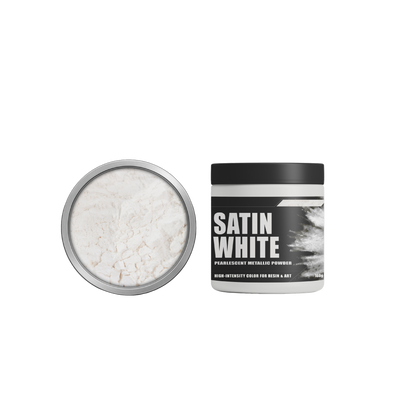
Pigmento Epoxi Metálico (160 gramos)
$40.00
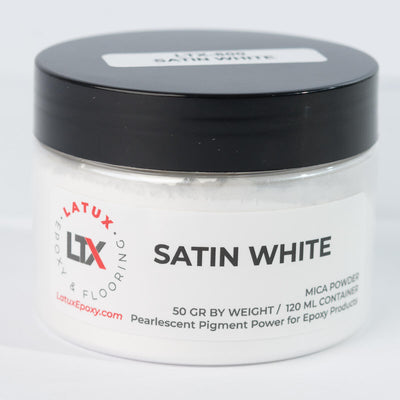
Pigmento Epoxi Metálico LTX-800 (50 Gramos)
$15.00
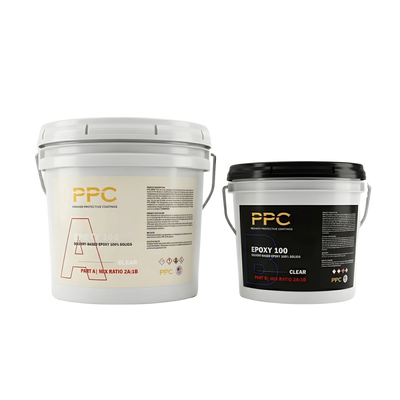
PPC Epoxy 100 Clear Recubrimiento Epoxi para Pisos 100% Sólidos (Kit de 3 Gal)
$169.15
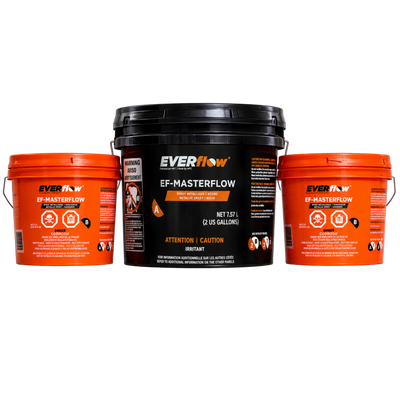
EF-Masterflow | Kit de Resina Epoxi para Pisos Metálicos (4 Gal) | 100% Sólidos, Estable a los Rayos UV
$199.00
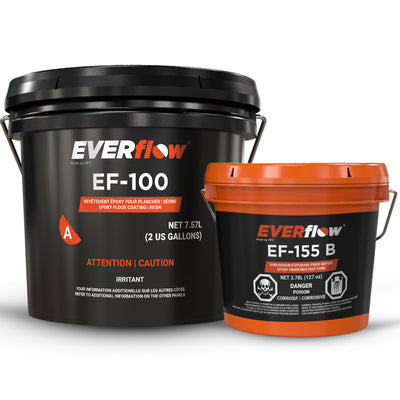
EF-155 | Kit de revestimiento epoxi superrápido para metálicos (3 gal) | 100% Sólidos
$210.00