
You roll out a perfect coat, walk away, and come back to a surface peppered with tiny bubbles. Or small craters where the coating pulled back from the floor. Or, days later, raised blisters that were not there before.
These defects look similar, but they have different causes. That matters, because the fix for one can do nothing for another. The first step is always the same: figure out which one you are looking at.
First, identify the defect
- Bubbles and pinholes. Small domes or tiny holes in the surface, often appearing while the coating is still wet or shortly after. Usually air or vapor escaping from below.
- Fisheyes. Round craters where the coating pulled away and left a thin or bare spot, like oil on water. Usually contamination on the surface.
- Blisters. Raised bumps that show up days or weeks after the floor cured, sometimes with liquid under them. Usually moisture coming up through the slab.
Bubbles and pinholes from outgassing
Concrete is full of tiny pores holding air and moisture vapor. When the slab warms up, that air expands and pushes up through the wet coating, leaving bubbles or pinholes as it escapes. This is called outgassing, and it is the most common cause of bubbles in a new floor.
It gets worse in a few predictable situations:
- Applying the coating while the slab is warming up, such as in the morning or when sun starts hitting the floor.
- Heaters or hot air blowing on the floor during application or cure.
- Very porous or freshly ground concrete with lots of open pores.
How to prevent it
- Coat as the temperature falls, not while it rises. Later in the day is usually better than first thing in the morning.
- Turn off heaters blowing warm air onto the floor.
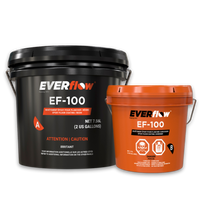
- Seal porous concrete with a thin primer coat first. A thin coat closes the pores so the thicker build coat goes on over a sealed surface. Base epoxies like EF-100 and EF-150 work as high-build primers.
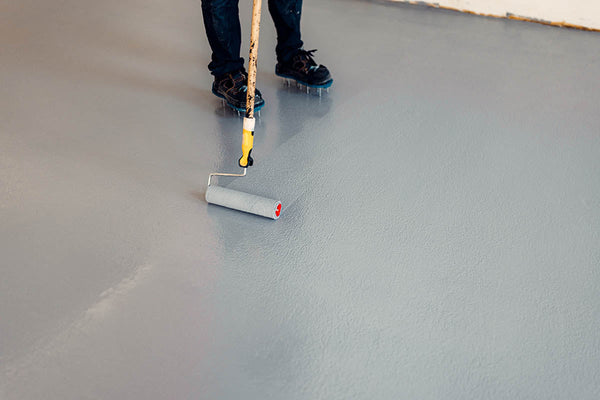
- Run a spiked roller through the wet coating to release trapped air before it sets.
Bubbles from mixing
Not every bubble comes from the slab. Some are whipped into the material before it ever hits the floor.
- Mix at low speed. A high-speed drill beats air into the resin. Use a low-speed drill and paddle.
- Follow the mix time on the data sheet. It varies by product. EF-100 calls for no more than 1 minute, while LTX-100 calls for a full 3 minutes, scraping the sides and bottom of the pail. Under-mixing leaves soft spots and over-mixing adds air.
- Mix only what you can place. Batch sizes should match what you can pour and spread within the working time, especially with fast-cure products that give you as little as 10 minutes.
- Pour immediately. Epoxy cure gives off heat, and a full batch left in the bucket heats itself up and starts setting fast. Get it on the floor right after mixing.
For metallic floors, where a flawless surface matters most, EF-Masterflow is formulated with advanced defoamers and surface additives for a pinhole-free pour.
Fisheyes from contamination
A fisheye is not an air problem. It is a surface tension problem. When the coating lands on a spot with oil, grease, silicone, wax or dust on it, it cannot wet out that spot, so it pulls back and leaves a crater.
Common sources include oil and fluid stains in garages, silicone from sprays and lubricants, residue from old sealers or cleaning products, and dust left behind after grinding.
How to prevent it
- Degrease oil-stained areas thoroughly before grinding.
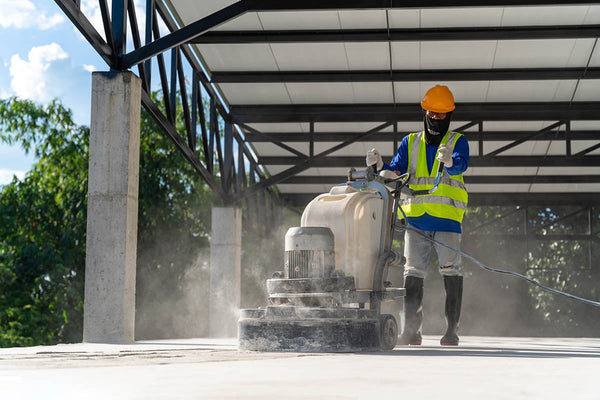
- Diamond grind to a clean profile, then vacuum all dust with a HEPA extractor.
- Keep silicone sprays and lubricants away from the work area.
- Wipe your boots, and keep foot traffic off a prepped slab until it is coated.
Proper prep solves most fisheyes before they start. See how to prepare concrete for epoxy.
Amine blush
In cool, humid conditions, some epoxies develop a waxy film on the surface called amine blush. The next coat can bead up on it and look a lot like fisheyes. Wash the surface with water and a scrub pad, rinse and let it dry fully before recoating. Keeping humidity down during application helps avoid it.
Blisters from moisture
Blisters that appear after the floor has cured are usually moisture pushing up from the slab. Coating over an active vapor drive is one of the most common causes of blistering and delamination on an otherwise sound floor.
The fix is not in the coating. It is in testing the slab before you start. If the concrete fails a moisture test, a dedicated moisture vapor barrier has to go down first and cure before the floor system goes on. Read moisture testing before epoxy and what a moisture vapor barrier does.
How to fix a floor that already has them
While the coating is still wet
Run a spiked roller through the area to pop bubbles and let the coating level back out. This only works while the material is still flowing.
After it cures
- Fix the cause first. Clean up the contamination, change the time of day you coat, or address the moisture. Otherwise the new coat can fail the same way.
- Small or scattered defects: lightly sand the area, remove all dust, and apply a thin recoat.
- Fisheyes: sand them out, degrease the area thoroughly, then recoat.
- Widespread bubbles or blisters: grind the surface back and recoat the floor.
Watch your recoat window as well. With EF-100, recoating after 48 hours means sanding the previous coat first, so plan repairs with that in mind. If the coating is lifting rather than bubbling, the problem is adhesion. See why epoxy floors peel.
Prevention checklist
- Test the slab for moisture before you start.
- Degrease, grind to a clean profile and vacuum all dust.
- Keep the slab at least 3°C, about 5°F, above the dew point.
- Coat while the temperature is steady or falling, with heaters off.
- Prime porous concrete with a thin coat first.
- Mix at low speed, for the time on the data sheet, and pour immediately.
- Run a spiked roller through the wet coat.
Frequently asked questions
Why does my epoxy floor have bubbles?
The most common cause is outgassing, when air and moisture vapor escape from porous concrete up into the wet coating, especially as the slab warms. Mixing at high speed and leaving mixed product in the bucket can also trap air.
What causes fisheyes in epoxy?
Contamination. Oil, grease, silicone, wax or dust on the surface stops the coating from wetting out, so it pulls back into a crater. Clean and degrease the surface and remove the contaminant before recoating, or the fisheyes will come back.
How do you fix bubbles in a cured epoxy floor?
For small bubbles or pinholes, lightly sand the area, remove all the dust and apply a thin recoat. If the defects are widespread, grind the surface back and recoat. Fix the cause first, or the new coat can bubble the same way.
How do I stop concrete outgassing when I coat a floor?
Apply the coating while the slab temperature is steady or falling rather than rising, turn off heaters blowing on the floor, seal porous concrete with a thin primer coat first, and run a spiked roller through the wet coat to release trapped air.
SIGUE LEYENDO
Más guías de los profesionales de Latux
Conocimiento que construye mejores pisos.
Explora la biblioteca completa de guías, tutoriales e información de producto para contratistas.