
Rust-Oleum EpoxyShield vs Epóxi Profissional: Uma Comparação Honesta (pelos Números)
Aviso logo de cara: nós vendemos epóxi profissional, então temos um cavalo nesta corrida. É justamente por isso que esta comparação se limita a números que você pode verificar. Todos os valores que citamos dos produtos da Rust-Oleum vêm das próprias fichas técnicas publicadas pela Rust-Oleum e dos anúncios de varejo, com links no fim deste artigo. Sem espantalhos, sem histórias de terror, e com uma seção honesta sobre quando o kit de loja grande é genuinamente a compra certa.
Porque esta é a verdade que as discussões de internet deixam passar: kits de epóxi de loja de ferragens e epóxi profissional de 100% sólidos não são produtos concorrentes. São produtos diferentes para trabalhos diferentes, e toda a diferença cabe em um único número. Vamos a ele.
O que o kit de loja grande traz de verdade
Rust-Oleum EpoxyShield é o kit que a maioria das pessoas tem em mente quando fala em epóxi para piso de garagem. Segundo a ficha técnica da Rust-Oleum (formulário ESH-39), é um epóxi de dois componentes curado com amina, autêntico, mas é base água: 52.6 a 52.8 por cento de sólidos por volume. A ficha especifica uma espessura de película seca recomendada de 3.0 a 3.5 mils por demão, afirma que na maioria das situações basta uma única demão, e classifica o rendimento prático em aproximadamente 250 sq ft por kit de sachê. Tempos de secagem a 70 a 80 F: tráfego de pedestres em 24 horas, tráfego de veículos em 3 dias. O kit vem com chips decorativos e um atacante ácido para o preparo, e a mesma ficha observa que o produto não é indicado para pisos com problema de umidade.
Rust-Oleum RockSolid é a linha superior deles. A ficha técnica (formulário RSD-01) descreve o Polycuramine, uma mistura proprietária de epóxi, uretano e poliureia, a 96 por cento de sólidos por volume, de demão única, autonivelante, com vida útil de mistura de 45 minutos a 1 hora. O rendimento publicado é de 200 a 250 sq ft por sachê, tráfego de pedestres em 8 a 10 horas, e tráfego de veículos em 24 a 36 horas. Também publica números reais de desempenho: dureza Shore D de 90 e perda de 40 mg no ensaio de abrasão Taber.
O marketing das caixas mostra como a própria Rust-Oleum os hierarquiza. O texto de varejo descreve o EpoxyShield como cinco vezes mais duro que a tinta epóxi de um componente, enquanto o anúncio do RockSolid se chama "20X Stronger Than Epoxy" e promove resistência ao descolamento por pneu quente. Mesmo dentro de uma única marca, a escada vai da tinta fina à química mais espessa.
Tinta epóxi vs epóxi 100% sólidos: a diferença de espessura
100% sólidos significa que não há água nem solvente no balde. Tudo o que você passa com o rolo fica no piso como plástico curado. Um galão de epóxi de 100% sólidos rende 1,604 sq ft a 1 mil de espessura, e isso não é número de marketing, é geometria.
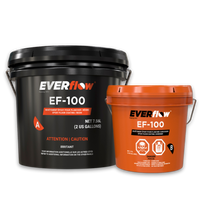
Aplique essa conta à nossa camada base EF-100: um kit de 3 galões cobre 150 a 200 sq ft de piso de garagem preparado em uma única camada base. A própria ficha do EpoxyShield especifica 3.0 a 3.5 mils secos, porque quando a água de um revestimento a 53 por cento de sólidos evapora, quase metade da película úmida deixa o piso. Então uma aplicação de camada base profissional deposita várias vezes mais material curado do que uma aplicação do kit de loja grande, antes de qualquer camada de acabamento.
A espessura não é tudo, a química e o preparo importam muito. Mas a vida útil, a resistência ao impacto e o desempenho diante de pneus quentes escalam todos com a quantidade de revestimento curado que existe de fato entre os seus pneus e o concreto. Esse único número explica quase todas as diferenças que vêm a seguir.
Lado a lado, spec publicada contra spec publicada
| SPEC | EPOXYSHIELD (BASE ÁGUA) | ROCKSOLID POLYCURAMINE | EVERFLOW EF-100 (100% SÓLIDOS) |
| Química | Epóxi base água curado com amina | Mistura de epóxi, uretano e poliureia | Epóxi de 2 componentes, 100% sólidos |
| Sólidos por volume | 52.6 a 52.8% | 96% | 100% |
| Película por demão | 3.0 a 3.5 mils secos | Não publicado na ficha técnica | Toda a película aplicada fica no piso, nada evapora |
| Rendimento publicado | Cerca de 250 sq ft por kit de sachê | 200 a 250 sq ft por sachê | 150 a 200 sq ft por kit de 3 gal |
| Método de preparo incluído | Atacante ácido incluído | Atacante ácido incluído | Esmerilhamento diamantado recomendado |
| Tráfego de veículos | 3 dias | 24 a 36 horas | 2 a 3 dias dependendo da camada de acabamento, segundo a ficha do sistema |
| Camada de acabamento estável a UV | Vendida separadamente | Sistema de demão única, transparente opcional | Parte obrigatória do sistema (poliaspártico ou poliuretano) |
| Faixa de preço | Cerca de $204 por um kit para 2.5 carros em um fornecedor nacional, agosto 2026 | Varia de acordo com o varejista | $169.15 por kit base de 3 gal |
Números da Rust-Oleum extraídos das fichas técnicas ESH-39 e RSD-01 e de anúncios de varejo atuais, com links em Fontes, abaixo. Números da Everflow extraídos da página de produto e da ficha técnica do EF-100.
Descolamento por pneu quente: o que está acontecendo de verdade
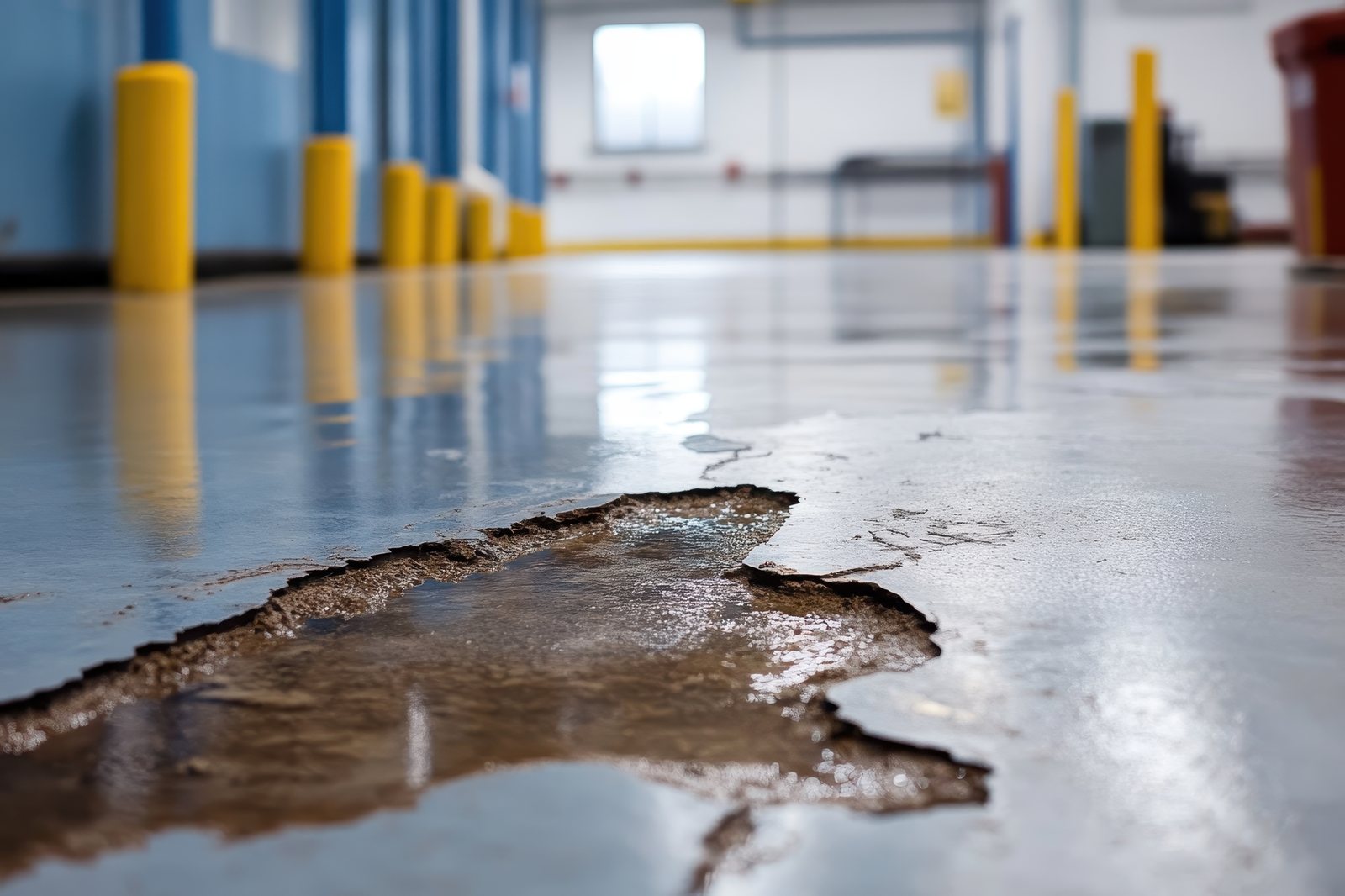
O descolamento por pneu quente é a falha característica dos revestimentos finos de garagem. Você estaciona depois de dirigir, os pneus transferem calor para o revestimento, a película amolece um pouco, e os pneus modernos carregados de plastificantes agarram essa película amolecida com mais força do que a película agarra o concreto. Na manhã seguinte há quatro manchas descascadas em formato de pneu.
Duas coisas combatem isso: profundidade de aderência vinda de um preparo mecânico de verdade, e massa de película que absorve calor sem amolecer por toda a sua espessura. Uma película de 3 mils sobre concreto atacado com ácido tem pouco dos dois. Essa é a reclamação mais comum que ouvimos de clientes que usaram um kit de loja grande antes de nos encontrar, e vale notar que a própria escada de produtos da Rust-Oleum aponta na mesma direção: a promessa de resistência ao pneu quente está no anúncio do RockSolid, o produto mais espesso e mais duro, e não no kit de entrada. A hierarquia deles concorda com a física.
Se um revestimento anterior já soltou sob os seus pneus, o catálogo de falhas em Por que o meu piso de epóxi está descascando? vai ajudar a diagnosticar antes de você revestir de novo.
A verdade sobre preparo que todo fabricante de kit conhece
Crédito a quem merece: as fichas técnicas da Rust-Oleum são honestas sobre preparo. Os dois kits incluem um atacante ácido, e a ficha do RockSolid vai mais longe, orientando um teste de umidade com plástico fixado com fita e um teste de fita com corte de estilete sobre revestimentos antigos antes de começar. Eles sabem o que nós sabemos: o piso falha na linha de aderência, não no balde.
A nossa posição, e ela vale para qualquer kit que você compre: o esmerilhamento mecânico diamantado é melhor que o ataque ácido para qualquer revestimento de piso. O ataque ácido tem dificuldade para remover a nata superficial e os seladores, deixa um perfil inconsistente, e exige um enxague perfeito para evitar resíduo que mata a aderência. Apresentamos o caso completo em Como preparar o concreto para revestimento de epóxi. Se você levar uma única coisa deste artigo, leve esta: a qualidade do preparo muda a vida útil do seu piso mais do que a marca na caixa.
Vida útil e o verdadeiro custo por ano
A Rust-Oleum não publica vida útil, então o que vem a seguir é a nossa experiência de campo, não a spec deles: em uma garagem de trabalho com estacionamento diário, kits de película fina costumam entregar de 2 a 5 anos antes que o desgaste, as marcas de pneu quente ou a perda de brilho obriguem a uma nova demão. Um sistema de 100% sólidos preparado com esmerilhamento e sob uma camada de acabamento estável a UV roda rotineiramente de 10 a 15 anos, e muitas vezes mais.
Agora a conta. A cerca de $204 cobrindo até 500 sq ft, o EpoxyShield custa aproximadamente $0.41 por sq ft por aplicação. Se durar 3 anos, isso dá cerca de $68 por ano em materiais, mais um fim de semana inteiro de preparo e nova demão a cada ciclo, mais 3 dias sem poder usar o piso a cada vez. Um sistema profissional custa várias vezes mais no início (fazemos a conta completa de material e mão de obra no nosso guia de custo de piso de garagem com epóxi), mas diluindo por uma vida de 10 a 15 anos os materiais caem na mesma faixa de $60 a $80 por ano. O dinheiro por ano fica quase empatado. O que você compra de fato com o sistema profissional é fazer o trabalho uma vez só: um fim de semana de preparo, um ciclo de cura, um piso.
Quando o kit de loja grande é a escolha certa
Com honestidade, às vezes ele é. Compre o kit de loja de ferragens quando:
- Você vai vender a casa dentro de um ou dois anos. Um piso novo, uniforme e salpicado de chips fica ótimo nas fotos, e a vida útil depois da escritura não é problema seu.
- O orçamento está realmente travado perto de $200. Um kit econômico instalado com capricho é melhor que uma laje nua soltando pó. Ponto final.
- O piso nunca recebe carro estacionado. Lavanderias, porões de depósito e cantos de oficina não geram falhas por pneu quente. Película fina em piso sem tráfego pode durar surpreendentemente muito.
- Você aceita o ciclo de repintura. Tem gente que trata o piso da garagem como a tinta da parede, renovando a cada poucos anos. Esse é um modelo de manutenção legítimo.
Se for o seu caso, compre e siga a caixa à risca, principalmente o desengraxe, o ataque ácido, o teste de umidade, e misturar um sachê por vez. A maioria das avaliações ruins desses kits descreve atalhos no preparo, não defeitos do produto.
Quando subir para o 100% sólidos
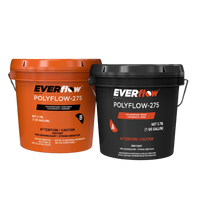
Suba quando o piso for a garagem de um carro de uso diário, quando você morar onde o verão cozinha a laje, quando o espaço se pagar como oficina, ou quando você simplesmente quiser fazer isso uma vez e parar de pensar no assunto. O caminho profissional é direto: esmerilhe a laje, passe a base EF-100 de 100% sólidos, e sele sob uma camada de acabamento estável a UV como o poliaspártico EF-275, porque epóxi puro de qualquer marca amarela sob o sol. Dimensione o pedido com o nosso guia de rendimento, e se você ainda estiver comparando sistemas, o guia de compra de epóxi para piso de garagem compara todas as opções que vendemos.
Perguntas frequentes
O Rust-Oleum EpoxyShield é epóxi de verdade?
Sim. A ficha técnica descreve um epóxi de dois componentes curado com amina, então quimicamente é epóxi autêntico. Também é base água, com cerca de 53 por cento de sólidos por volume, e é por isso que cura formando uma película de 3.0 a 3.5 mils, uma fração da espessura que um produto de 100% sólidos deixa por demão.
Quanto tempo o EpoxyShield dura em um piso de garagem?
A Rust-Oleum não publica vida útil. Pela nossa experiência de campo, kits de película fina em garagem com estacionamento diário costumam durar de 2 a 5 anos antes que o desgaste ou o descolamento por pneu quente obrigue a uma nova demão, e um preparo caprichado mais um teste de umidade é o que empurra você para o extremo mais longo dessa faixa.
Posso aplicar epóxi de 100% sólidos sobre um piso antigo de EpoxyShield?
Só se o revestimento antigo estiver genuinamente aderido. Corte um X através da película com um estilete, pressione fita por cima, e arranque a fita de uma vez. Se o revestimento ficar no lugar, lixe ou esmerilhe toda a superfície para dar perfil e revesça por cima. Se levantar, remova o revestimento antigo por completo com esmerilhamento, porque epóxi novo sobre uma película que está falhando herda a falha.
O RockSolid é melhor que o EpoxyShield?
Pelos próprios números publicados pela Rust-Oleum, o RockSolid é o produto mais forte: 96 por cento de sólidos contra cerca de 53, tráfego de veículos em 24 a 36 horas contra 3 dias, e dureza Shore D de 90. É a linha superior deles e o preço acompanha. Os dois seguem abaixo da espessura de película de um sistema profissional de 100% sólidos com uma camada de acabamento dedicada.
Fontes
Materiais publicados pela Rust-Oleum citados neste artigo: Ficha técnica do EpoxyShield base água (ESH-39) · Ficha técnica do kit RockSolid Polycuramine para piso de garagem (RSD-01) · Página de produto do EpoxyShield · anúncios de varejo do kit EpoxyShield para 2.5 carros (Home Depot, Contractor Tool Supply, preços de agosto de 2026) e do kit RockSolid para 2.5 carros (Amazon). Números da Everflow extraídos da página de produto e da ficha técnica do EF-100.
Conhecimento que constrói pisos melhores.
Explore a biblioteca completa de guias, tutoriais e informações de produto para contratantes.