
The Full Broadcast Flake Epoxy System: A Contractor's Guide from Start to Finish

The full broadcast vinyl flake floor system is the single most popular epoxy floor type in North America. It is durable, slip-resistant, endlessly customizable and when properly installed, one of the most attractive floor finishes available. It is also the most requested system from residential and commercial clients who want a professional look without the complexity of metallic effects.
This guide walks through the complete installation process for a professional full broadcast flake floor using the Everflow system.
What Is a Full Broadcast Flake System?
A full broadcast flake system consists of three layers:
- Base coat: 100% solids epoxy (typically pigmented)
- Vinyl flake broadcast: Decorative vinyl chips thrown into the wet base coat until refusal (full coverage)
- Topcoat: Polyaspartic or polyurethane clear coat for UV stability, durability and gloss
The result is a seamless, easy-to-clean floor with a professional, high-end appearance. The vinyl flakes provide texture and slip resistance, making this system ideal for garages, commercial kitchens, showrooms, locker rooms and any space that needs both beauty and function.
Materials Required
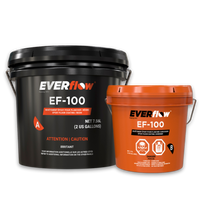
- Everflow EF-100 (base coat epoxy, in a color that complements your flake blend)
- Latux Floor Flakes (vinyl blend in your chosen color combination)
- Everflow EF-275 or EF-280 Polyaspartic (topcoat)
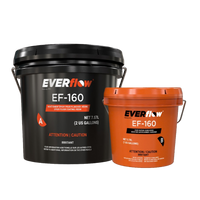
- EF-160 Moisture Vapor Barrier (if required by moisture testing)
- Floor grinder with appropriate diamond tooling
- Squeegee or gauge rake
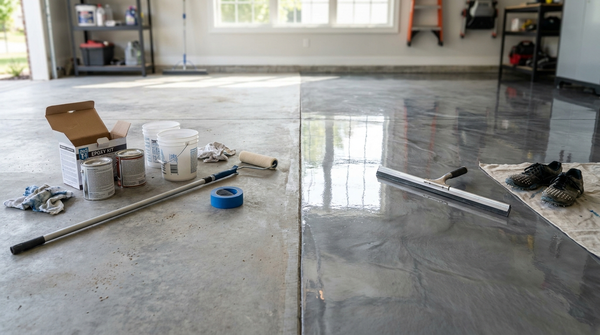
- Spiked roller shoes
- Chip brush for edges
- Scraper or concrete floor scraper for flake knock-down
Step 1: Surface Preparation
As with all epoxy systems, surface preparation is the foundation of a successful job. Grind the concrete to a CSP 2-3 profile using a planetary floor grinder. Degrease any contaminated areas. Fill cracks and voids with epoxy crack filler. Perform moisture testing and apply EF-160 MVB if required. Vacuum and clean thoroughly.
Do not rush this step. A flake floor that fails due to poor prep is expensive and time-consuming to fix. See our complete guide on concrete surface preparation for detailed instructions.
Step 2: Apply the Base Coat
Mix your EF-100 Epoxy per the Technical Data Sheet (2:1 ratio by volume). Add your chosen base color pigment if desired (a mid-tone color that complements your flake blend gives the best results if any flake areas remain unfilled). Apply with a squeegee or gauge rake at 100-133 sq ft per gallon, which is 12-16 mils wet film thickness.
Work systematically from the back of the room toward the exit. Wear spiked shoes throughout application.
Step 3: Broadcast Flakes to Refusal
While the base coat is still wet, broadcast your vinyl floor flakes into the coating. Hold the bag at waist height and throw the flakes upward, allowing them to flutter down and land randomly on the surface. Work systematically across the floor, broadcasting flakes generously until the floor appears to have uniform coverage.
"To refusal" means you continue broadcasting until the wet epoxy can no longer accept additional flakes, they begin bouncing off or sitting on top of previously landed flakes. At this point, the floor has full coverage. Typical flake usage is 0.14 to 0.2 lb per sq ft for full broadcast coverage (5 to 7 sq ft per pound for 1/4 inch flake).
Allow the base coat to cure fully (18-24 hours) before proceeding.
Step 4: Scrape and Sweep
Once the base coat is cured, scrape the floor with a floor scraper or hard-blade squeegee to knock down any raised flake edges. Vacuum and sweep thoroughly to remove loose flakes. The floor should feel relatively smooth to the touch with no sharp flake edges that could interfere with topcoat application.
Step 5: Apply the Topcoat
Apply Everflow EF-275 Polyaspartic or EF-280 Polyaspartic Kit at 133 sq ft per gallon, which is 12 mils over a vinyl flake broadcast (267 sq ft per 2-gallon kit). The topcoat seals the flakes, fills any gaps between flake edges, and provides the UV stability and chemical resistance your client needs for long-term performance.
For high-traffic commercial applications, consider two topcoat applications for maximum durability. Allow a minimum of 2-4 hours before light foot traffic.
Choosing Your Flake Blend
Latux floor flakes are available in a range of color blends to suit any design aesthetic. Consider the following when selecting a blend:
- Match the environment: Industrial spaces benefit from grey/charcoal blends; retail and showrooms from neutral or earth tones
- Consider the base color: A warm-toned flake over a grey base creates a completely different look than the same flake over a beige base
- Ask the client: Show samples before ordering. Color perception varies significantly in different lighting conditions
Maintenance
Broadcast flake floors are among the easiest floor types to maintain. Clean with a neutral pH cleaner and a microfiber mop or auto scrubber. Avoid acidic cleaners or abrasive scrubbing pads. In heavy commercial applications, re-apply the polyaspartic topcoat every 3-5 years.
Shop the complete flake floor system at Latux: Everflow EF-100, floor flakes and polyaspartic topcoats. Or call (800) 413-1427 for system recommendations.
KEEP READING
More guides from the Latux pros
Knowledge that builds better floors.
Browse the full library of contractor guides, how-tos, and product insights.