
Gym & Fitness Facility Floor Coating
Gym floors get judged twice: once by a member walking in for a tour, and once by whoever has to clean the place at 10pm. A coated slab is one of the few surfaces that answers both. It photographs well, it takes brand color, and because it is one continuous sealed surface there is nowhere for sweat, chalk dust, or spilled pre-workout to live.
Where a coating wins, and where it does not
Worth being straight about this, because getting it wrong is expensive.
A coating is the right surface for open studio floors, cardio areas, functional training space, stretching and mat areas, lobbies, hallways, and locker room approaches. It handles foot traffic, equipment wheels, dragged sleds on a smooth surface, and constant cleaning.
A coating is not the right surface directly under a barbell. A loaded bar dropped from height is a point impact, and no thin-film coating on concrete is designed to absorb that. Platforms and free weight areas need rubber, and the correct build is rubber laid over a coated slab. You get the sealed, cleanable concrete underneath and the impact protection on top. Anyone who tells you a coating alone will take deadlift drops indefinitely is selling you a repair.
Cleaning is the real argument
Tile has grout. Grout in a gym absorbs sweat and holds odor, and no amount of mopping fixes a joint that has been soaking for two years. Vinyl has seams. Seams lift at the edges once carts and cleaning machines run over them enough.
A coated floor has neither. It is nonporous and continuous, so nightly cleaning is a dust mop and a damp mop with a neutral cleaner, and disinfectant sits on the surface where it can actually do its job instead of soaking into a joint. Over a 100% solids epoxy base, a polyaspartic topcoat is the layer taking the daily chemical contact, and it is the layer you refresh in a few years rather than replacing the floor.
Slip resistance, because people sweat on it
A high gloss floor with sweat on it is slippery, and a gym is the worst possible place to learn that. Plan texture in from the start rather than bolting it on after an incident.
The usual approach is a broadcast: flake into the base coat gives texture plus a finish that hides scuffs and dropped chalk, which matters in a room that never fully stops being used. The complete flake and quartz systems line covers the heavier builds. Tell us which zones need grip and which are appearance-first, since they are rarely the same rooms.
Color, brand, and the wall the camera points at
Gyms are photographed constantly, by members and by marketing. The floor is in every one of those shots.
Solid brand color comes from solid tone pigment pods, which is the right tool when you need a specific flat color across a whole room. For a feature area, a studio, or a lobby where you want the floor itself to be the statement, a metallic system gives depth that flat color cannot. We have coated fitness studios in deep metallic red where the floor is genuinely the most photographed surface in the building. See the project gallery.
Closing the room for as little time as possible
Gyms rarely close. Fast-cure chemistry is how the schedule works: EF-290 recoats in 2 to 4 hours and takes foot traffic in 3 to 6, so a studio can go down after the last evening class and be open for the 6am session two days later.
Most facilities do it room by room rather than all at once: studio one week, cardio floor the next. Plan the sequence around your class schedule and get the transitions where a doorway already breaks the floor.
Prep, and the equipment problem
Everything has to come off the floor. That is usually the biggest logistical item, not the coating. Once it is clear, diamond grind to an open profile near ICRI CSP-2 so the base coat bonds to concrete rather than to old sealer or adhesive residue from previous flooring.
Old rubber tile adhesive is common in gyms and it is stubborn. Budget grinding time for it. See the floor grinders lineup, and run a dust extractor at the head so silica dust does not end up in the ventilation and on the equipment you just moved.
Sizing the job
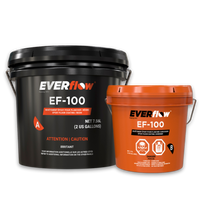
One 3-gallon EF-100 kit covers 150 to 200 square feet as a base coat. Primer and topcoat layers cover differently, so work each layer out with the coverage guide. Measure the actual coated area room by room, since gyms are almost never one open rectangle. Run the numbers with the coverage guide.
Common questions
Will dropped dumbbells crack it?
Hand weights dropped from waist height onto a properly built floor are generally fine. Loaded barbells from overhead are not, and that is what rubber platforms are for. Zone the room honestly and put the right surface in each zone.
Can we coat under existing rubber flooring?
Yes, and it is a good idea. Sealing the slab under rubber means moisture and sweat that works through the seams is not soaking into bare concrete. It also makes the eventual rubber replacement much cleaner.
Does it hold up to gym wipes and disinfectant?
A polyaspartic wear course is built for chemical contact and daily cleaning. Send us the specific products your cleaning crew uses if you are running anything aggressive, and we will confirm the spec before you buy.
Talk to a coatings expert
Send us the room list with square footage, which zones take weights, and how long each room can be closed. We will spec the system zone by zone and build the material list. Call (800) 413-1427 or use the contact page.