

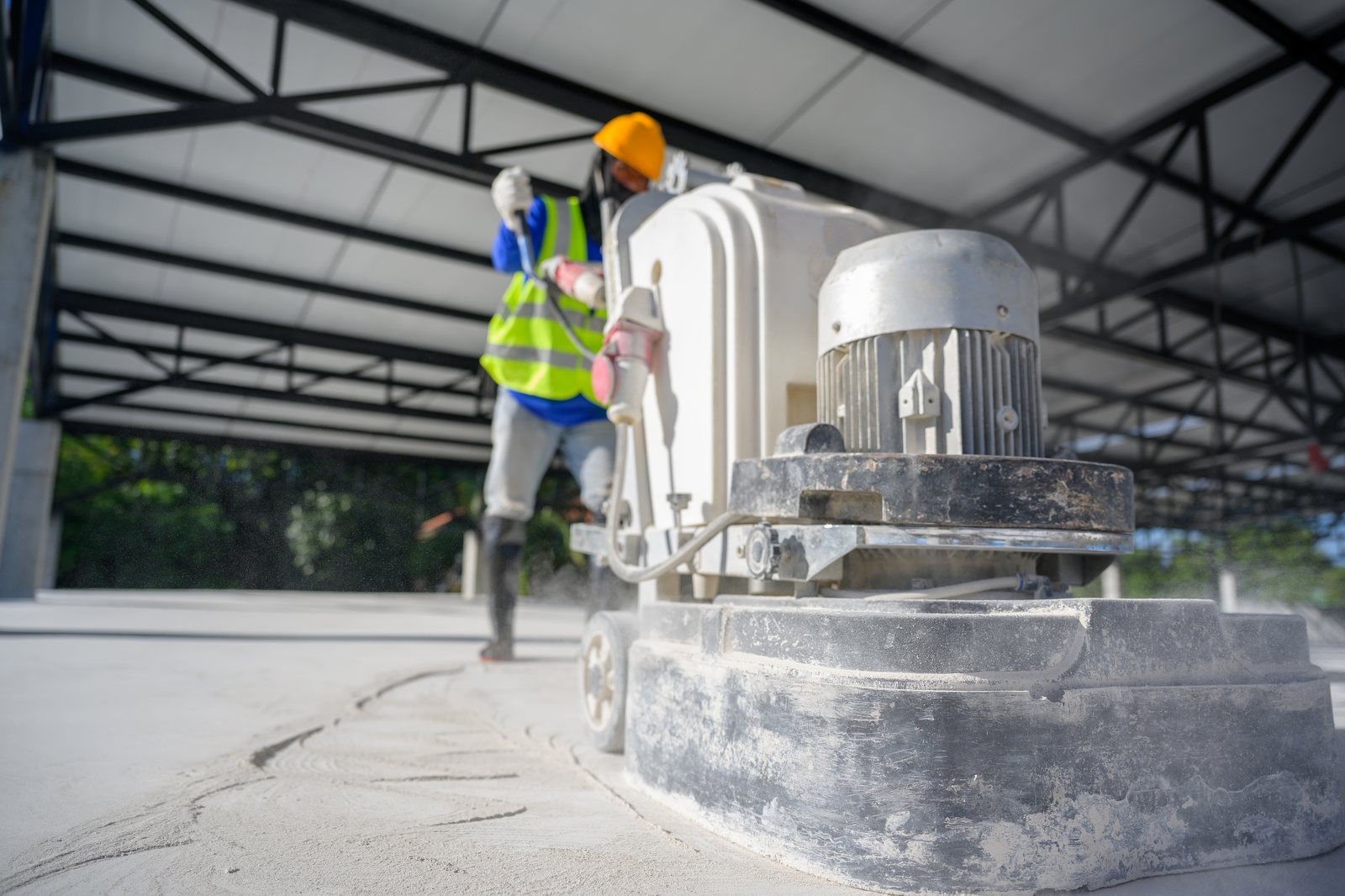
If you searched for a concrete grinder, odds are the first thing you typed was "rental" or "rental near me." That is the honest reality of this tool. Most people meet a floor grinder for the first time when they have one slab to prep and a rental counter down the road. So the real question is simple. Do you rent the machine for a weekend, or do you buy one and own it?
There is a clean answer, but it depends on who you are and how many floors are in your future. Below is the framework we give customers who call us before they prep. No sales pressure, no invented numbers. Just how to think about it.
First, why you need a grinder at all
Epoxy does not glue itself to concrete. It bonds mechanically, which means it grips the tiny peaks and valleys in the surface. A troweled or sealed slab is too smooth and too closed for that grip. Grinding opens the surface, knocks off the weak top layer, removes old coatings and glue, and leaves a clean profile the coating can bite into.
This is the step that decides whether your floor lasts ten years or peels in one. We cover the why in depth in our guide on how to prepare concrete for epoxy coating, and it is the same reason a failing floor almost always traces back to prep in why epoxy floors peel. A planetary grinder is the tool that does that job right. Acid etching is the shortcut, and it is a weaker profile on most floors.
So a grinder is not optional gear for a serious coating. The only question is whether you rent one or own one.
When renting makes sense
Renting is the right call in a specific situation: one floor, one time, and you do not expect to do this again.
Rent if most of these describe you.
- You are coating a single garage, basement, or patio at your own house.
- It is a one and done project, not the start of a side business.
- You have somewhere local to pick up a machine and a dust vacuum together.
- You are comfortable learning the machine on the clock and returning it clean.
- You do not want to store a heavy machine or maintain it afterward.
For a true one time floor, paying for a day or two of use is cheaper than owning a machine that then sits in your garage for a decade. That is the honest case for renting, and it is a real one.
Two cautions before you drive to the counter. First, budget for the vacuum too. Grinding dry concrete without dust control fills a garage with silica dust in minutes, which is both a health hazard and a mess. Rent or buy dust extraction alongside the grinder, never the grinder alone. Second, build in learning time. Your first thirty minutes on a planetary grinder are your slowest, and rental clocks do not pause while you figure out the machine.
When buying wins
Buying flips from luxury to obvious the moment this stops being a one time job.
Buy if any of these are true.
- You run a coating, flooring, or concrete business, or you want to.
- You have more than one floor to do, even spread across a year.
- You prep floors for other people, even occasionally for cash.
- You are a property manager, builder, or facility crew that hits concrete regularly.
- Rental availability near you is thin, and you cannot count on a machine being free the weekend you need it.
Here is the part rental math misses. Every rental day is money you never get back. Buy a machine and each floor after the first gets cheaper, because the tool is already paid for. Rent, and every single floor costs you full price again. For anyone doing repeat prep, owning is the cheaper path and it is not close.
Owning also buys you control. The machine is ready when your schedule and the weather line up, not when the counter has one in stock. You learn one machine deeply instead of relearning whatever the rental yard hands you. And the diamond tooling is matched to your grinder and your concrete, which is a real difference on hard or soft slabs.
The break-even, without made-up numbers
We are not going to quote you a rental rate or a purchase price, because both move with your region, the machine size, and the season. But you do not need our numbers to run this. You need your own, and the math is short.
Do this in three steps.
- Call two local rental yards and get the real day rate for a grinder that fits your floor, plus the vacuum. Get the deposit and any cleaning fee too.
- Estimate how many days a typical floor takes you, then how many floors you expect over the next year or two. Be honest about the second number.
- Get a real purchase quote on a grinder sized to your work, tooling included.
Now compare. Divide the purchase price by your true rental day rate. That gives you the rough number of rental days it takes before buying would have been cheaper. If your realistic workload clears that number of days within a reasonable window, buy. If it does not, rent.
The pattern almost always lands the same way. One personal floor, rent. Repeat work of any kind, buy, and usually the machine pays for itself faster than people expect once tooling and rental deposits are counted.
Propane vs electric, kept simple
If you decide to buy, the propane versus electric question comes up fast. Keep it practical.
Electric grinders are the default for most garage, residential, and light commercial work. They are quieter, they produce no exhaust, and they run anywhere you have suitable power. For indoor and enclosed spaces, electric is the safe and simple choice. The catch is power. Larger electric machines need higher voltage circuits, so confirm what your building actually supplies before you buy.
Propane grinders exist to solve one problem: big open floors where dragging a cord and finding heavy power is impractical. Warehouses, large commercial slabs, and open new construction are where propane earns its place. The trade is exhaust, which means propane belongs in well ventilated or open areas, not a closed home garage. For the DIY and small contractor audience this guide is written for, electric is almost always the answer.
Size the grinder to the floor
The other buying decision is width, and it scales with floor area. A grinder that is too small turns a big floor into a slow grind. One that is too big is clumsy in a tight garage and harder to move.
A rough way to think about it.
- Small floors and tight spaces (single garage, basement, small commercial room): a compact single or dual head machine in the 20 inch class is nimble and gets into corners. In our lineup that is where a Lavina 20N or a Husqvarna PG 450 lives. Browse these in Floor Grinders: Small and Mid.
- Mid size floors (large or multi car garages, small warehouses): a wider planetary machine in the 25 inch class, such as a Lavina 25 or a Husqvarna PG 510 or an HTG-550, covers ground faster without becoming unwieldy.
- Large and industrial floors (warehouses, showrooms, big commercial slabs): step up to 30 inch plus machines and, where it fits, remote or ride-on. Think Lavina 32, Husqvarna PG 8 P, or the HTG-680 and HTG-820RC. These live in Floor Grinders: Large and Industrial.
If you want the Husqvarna and HTC platform specifically, the full range sits in the Husqvarna and HTC series. And whichever machine you land on, pair it with real dust control from the dust extractors collection. On a coating job the grinder and the vacuum are one system, not two purchases.
The short version
Renting a concrete grinder is smart for exactly one situation: a single floor you will never repeat. The moment you have more than one floor in front of you, or you are prepping for anyone but yourself, buying is the cheaper and less stressful path. Run the break-even with your own local numbers, size the machine to your slab, choose electric unless you are working big open spaces, and never grind without dust control. Do that and the machine stops being an expense and starts being the reason your floors last.
Frequently asked questions
Is it worth buying a concrete floor grinder?
It is worth buying if you have more than one floor to prep, if you run or want to run a coating or flooring business, or if rental availability near you is unreliable. For a single one time floor at your own home, renting is usually cheaper. The tipping point is repeat use: once you prep floors regularly, an owned machine pays for itself and every floor after the first costs less.
How much does it cost to rent a concrete grinder?
Rental cost varies a lot by region, machine size, and season, so get a live quote from two local yards rather than trusting a single online figure. When you price it, ask for the day rate, the deposit, any cleaning fee, and the cost of the dust vacuum, which you should always rent alongside the grinder. Add those together for the true cost of a rental day.
What size concrete grinder do I need?
Match width to floor area. A compact machine in the 20 inch class suits single garages, basements, and tight rooms. A 25 inch class machine covers large garages and small warehouses faster. Floors above that, warehouses and big commercial slabs, call for 30 inch and larger machines. When in doubt for a home garage, a 20 to 25 inch planetary grinder is the practical range.
Propane or electric for a garage floor?
Electric, in almost every case. Electric grinders make no exhaust and are safe to run in an enclosed garage, and they cover residential and light commercial work well. Confirm your circuit can supply the machine, since larger electric grinders need higher voltage. Propane is built for big open or outdoor floors with proper ventilation, not a closed home garage.
Can I grind a garage floor before epoxy?
Yes, and you should. Grinding is the best way to open and profile a garage slab so epoxy can bond mechanically. It removes old coatings, glue, and the weak surface layer, and it leaves the clean profile the coating needs. Grinding gives a stronger, more reliable bond than acid etching on most floors, which is why it is the method serious installers use.
Knowledge that builds better floors.
Browse the full library of contractor guides, how-tos, and product insights.