
Food Grade Epoxy Flooring for Wash Down Areas
What people mean when they search for food grade epoxy flooring
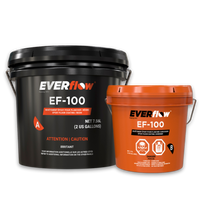
This phrase gets used loosely and it causes real problems at audit time, so here is the plain version. No government programme signs off a floor coating. There is no agency status for a floor to carry. What a manufacturer can tell you is what its own testing shows. PPC states that the Krete slurry and topcoat are antimicrobial and that they meet requirements for indirect food contact. Everflow states the same indirect food contact requirement for EF-100, EF-150 and EF-155. Those are the manufacturers' statements and they are printed on the product pages and the data sheets.
What we will not do is dress a floor up in an agency status, because no such status exists for a coating, and inventing one is what puts both the supplier and the operator in trouble. If your sanitation plan, your third party auditor or your customer's supplier questionnaire needs specific documentation, ask and we will send the manufacturer data sheets so your quality team reads the source. That is a better answer than a marketing line, and it is the one that survives an audit.
What actually fails on a food plant floor
The drain edge and the wall base, every time
Sanitation runs a hose at the floor and the wall junction on purpose, because that is where product collects. A coating that stops flat at the wall gives water a seam to sit in. Within a season it is under the film. The wet side has to turn up the wall as a cove and terminate into a saw cut keyway at every drain, and the drains themselves usually need to come out and be reset so the coating can key into them.
Steam and hot water, not the product
Cookers, retorts, CIP and hot water sanitation swing slab temperature fast. A thin film epoxy at ten to twenty mils cannot track that movement against the concrete and eventually debonds. Urethane cement at 1/8 to 3/16 inch is close enough to concrete in behaviour that it stays put, and the Krete slurry carries a rated service range of 26.5F to 185F.
The dry side gets over specified, the wet side gets under specified
We see both on the same plan. A dry pallet aisle gets a mortar system it will never need, and the cook room gets a roller applied epoxy that is gone in a year. Splitting the spec is where the budget comes back. The money belongs on the wet side, on the drain detailing and on the prep.
Downtime and cure, around a production schedule
Manufacturer figures at 72F.
- Wet side, Krete Slurry SL. Foot traffic 12 hours, heavy traffic 24 hours, full chemical cure 5 days. The topcoat over it is light foot at 24 hours and full chemical cure at 7 days. Place the topcoat within 24 hours of the slurry and no prep is needed; past that, it has to be diamond ground first.
- Dry side, EF-155. Recoat in 2 to 4 hours, foot traffic in 6 to 8 at 68F. A full system goes down in one day.
- Dry side, EF-150. Recoat in 6 to 8 hours, foot traffic in 8 to 12. Both apply on substrates down to 32F, which matters at a chilled dock door.
The practical shape of a plant job is room by room, not floor by floor. One process room comes down, gets demolished, prepped, poured and topcoated inside a long weekend, and production shifts to the parallel line. The chemical cure is the part that gets rushed and should not be. Hold full strength caustic sanitation off a new wet side floor until the manufacturer's chemical cure time has passed, even though it will take foot traffic long before that.
Prep, drains and slab moisture in Florida
Urethane cement wants a shotblast to CSP 2 to 3. That is deeper than a grind and it is not optional. Existing quarry tile, thinset and failed coatings come off first. Budget for drain replacement or reset on the wet side, because a new floor keyed into an old corroded drain body fails at exactly the point you paid to fix.
Containment and extraction are a bigger deal here than in most buildings. Prep dust in a food plant is a contamination event, not a housekeeping problem, so the work runs behind containment with HEPA extraction and the crew works in bays. Propane and electric machines are both available so the plan can match what your ventilation will allow.
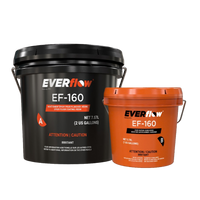
On slab moisture, the wet side has a straightforward answer: the Krete Slurry SL page states that moisture testing is not required before install. The dry side does not get that. A Florida slab poured on grade with no vapour retarder commonly emits enough to blister a thin film epoxy, so test it and put EF-160 down first if the numbers say so. Quantities change with thickness and with how much cove and detail work the room has, so use the coverage guide and pull the sheets from technical data sheets before the spec goes out.
Where to go next
This page sits under our commercial and industrial flooring overview. If the room is a kitchen rather than a process hall, start at commercial kitchen flooring. If it is a brewhouse or a still room, see brewery and distillery floors. For coolers and freezers, see cold storage and freezer floors.