
Commercial Kitchen Epoxy Flooring
A commercial kitchen floor lives a hard life: grease, dropped pans, cart wheels, nightly washdown, and a health inspector who wants every square inch cleanable. Seamless resin flooring is the standard answer because it has no grout joints to trap grease and no seams to harbor bacteria. The question is which resin goes where, and that deserves a straight answer.
The honest part first: thermal shock
Directly behind the cook line, where fryer spill zones and steaming washdown water hit the floor daily, the classic spec is urethane cement. That chemistry rides out rapid temperature swings that can stress a rigid epoxy film over time. We are not going to pretend otherwise: if your washdown protocol runs very hot water over the same zone every night, urethane cement is the right material there, and a Latux urethane cement line is on the way for exactly that duty.
Everywhere else in a food service building, a 100% solids epoxy system with a polyaspartic topcoat is a proven, cost-effective floor: front-of-house, dry storage, prep areas, service corridors, walk-in cooler surrounds, bar lines, and dish areas with moderate-temperature washdown.
The Latux kitchen-area system
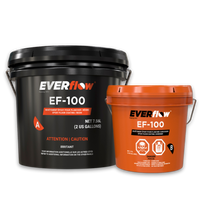
The base is EF-100, a 100% solids epoxy that meets requirements for indirect food contact, cures at 6,200 psi compressive strength, and runs under 50 g/L VOC, so it can be installed in an operating building without solvent fumes soaking into the space. One 3-gallon EF-100 kit covers 150 to 200 square feet as a base coat. Primer and topcoat layers cover differently, so work each layer out with the coverage guide. Over it goes a polyaspartic topcoat, EF-275 or EF-280, which adds chemical and abrasion resistance and keeps the finish from ambering under kitchen lighting.
Two details matter in wet areas. First, traction: a smooth high-gloss floor gets slick under grease and water, so wet zones get an aluminum oxide grit broadcast between coats for grip. Second, coving: run the floor material up the wall as an integral cove base of 4 to 6 inches, so the floor washes out like a bowl with no 90 degree corner for grime to sit in. Inspectors look for it, and it is far easier to install during the floor build than after.
Cleanability and downtime
A sealed resin floor strips the nightly cleaning job down to squeegee and washdown, with no grout lines to scrub and no porous concrete drinking in grease. Installation downtime stays short with the fast-cure options: EF-150 shortens the base recoat window, and the polyaspartic topcoats recoat in 2 to 4 hours and take foot traffic in as little as 3 to 6, so a section coated after Saturday close can be back in service for Monday prep.
Sizing and next steps
Measure the rooms, then run the numbers with the coverage guide or the contractor material takeoff walkthrough, or browse the full epoxy floor coatings line.
Talk to a coatings expert
Kitchens are zone-by-zone projects, and the right spec depends on your washdown temperatures, hours, and health code requirements. Call (800) 413-1427 with your floor plan and we will map which areas fit the epoxy system today and which should wait for urethane cement, so you only buy the floor once.
Related guides: epoxy vs polyaspartic for choosing your layers, gym and fitness floors for another seamless, sanitary build, and how to choose a floor grinder for the prep side.