
How to Clean Epoxy Floors
Cleaning and maintenance
How to clean epoxy floors comes down to three things: get the grit off before it scratches, wash with a pH-neutral cleaner at the label dilution, and rinse so nothing stays on the surface. Latux Epoxy has supplied and installed resinous floors in South Florida since 2004, and most of the "my floor is ruined" calls we take turn out to be a cleaning problem, not a coating problem.
We supply and we install · Authorized dealer for every brand we carry · Counter in Pompano Beach · English, Spanish and Portuguese
Start here
Why epoxy floor cleaning is different
A coated floor is nonporous. Bare concrete drinks what you put on it; epoxy does not, so whatever you leave on it stays on top. Soap that is never rinsed dries into a film that catches dirt, looks hazy and turns slick when wet. The fix is almost always less cleaner and more rinse water. On a good floor the top layer is a polyaspartic or polyurethane wear coat. That is the layer you clean and the layer that takes the scratches.
The routine
Daily and weekly epoxy floor maintenance
Dry first, always
Grit is what wears a topcoat dull. A microfiber dust mop or soft broom takes it off without scratching. Do it before any wet cleaning, or the mop just drags grit around. On a flake or textured floor, a soft push broom reaches into the texture better than a flat mop.
Wet clean with two buckets
One bucket of cleaning solution, one of clean rinse water. Mop, wring into the rinse bucket, then go over the floor once more with clean water only. A squeegee pulls standing water to a drain or out the door so the floor dries without spots.
| Floor | Dry mop or sweep | Wet clean |
|---|---|---|
| Home garage | Weekly | Monthly, and after spills |
| Basement, laundry, living space | Weekly | Every two to four weeks |
| Auto shop, showroom, retail | Daily | Several times a week, with a scrubber |
| Warehouse aisles | Daily | Weekly, more at docks and entrances |
| Commercial kitchen, food and beverage | Every shift | Every shift, per the sanitation program |
What to use
The best cleaner for epoxy floors
The best cleaner for epoxy floors is a pH-neutral floor cleaner mixed at the label dilution, not stronger. It lifts everyday dirt without attacking the topcoat and rinses off clean. For oil and grease, spot treat with a diluted degreaser made for sealed or coated floors, then rinse.
What causes trouble:
- Acidic cleaners. Vinegar, citrus and acid-based products dull a gloss topcoat with repeated use.
- Soap and "shine" products. Dish soap, oil soap and anything that promises shine leave the film that shows up as haze and streaks.
- Floor polish and wax. They sit on the coating, get slippery when wet and have to be stripped later. A coated floor does not need them.
- Strong solvents. Acetone, lacquer thinner and paint stripper can soften or mark some coatings. Spot work only, test first.
- Strong alkaline cleaners at full strength. They can leave a dull white cast, one of the causes on our turning white page.
Can you use vinegar, bleach, Simple Green, Pine-Sol, a Swiffer or a steam mop?
| Product or tool | Our answer | Why |
|---|---|---|
| Vinegar | Not as a routine cleaner | It is an acid and dulls the gloss over time. |
| Bleach | Diluted, to disinfect only, then rinse | Not a cleaner, can discolor some finishes. Never mix with ammonia or acids. |
| Simple Green or similar degreaser | Yes, diluted, on oily spots, then rinse | Full strength and left to dry, it leaves residue. |
| Pine-Sol and scented multi-surface cleaners | Not as your regular cleaner | Fragrance and surfactants film on a nonporous floor. |
| Ammonia | Not routinely | Streaks, and strong solutions can dull a topcoat. |
| Swiffer or spray mop | Dry pads yes, wet pads then rinse | Pad solution stays on the floor if nothing rinses it. |
| Steam mop | No, on standard epoxy | Repeated heat cycling is how coatings let go. Rooms that need steam need urethane cement. |
| Pressure washer | Yes, with care | Wide fan tip, moderate pressure, away from chips and coating edges. |
Stains and spills
How to remove stains, tire marks and rust from an epoxy floor
Speed matters more than product. A cured floor resists most spills better for ten minutes than for ten days.
Oil, transmission fluid and coolant
Blot with rags or absorbent without spreading it, then a diluted degreaser, a soft nylon brush and a clean water rinse. Coolant is slippery, so treat it as a safety issue first.
Brake fluid and battery acid
Wipe them up right away; both can mark a coating if they sit. Neutralize battery acid with baking soda and water, then rinse.
Tire marks
Scuffs on the surface come off with a degreaser and a stiff nylon brush. Yellow-brown patches exactly where tires park are plasticizer that migrated into the surface from hot tires. Those do not scrub out; light abrasion sometimes takes them out, otherwise it is a recoat. The turning yellow page explains how to tell them apart.
Rust, road salt and hard water
For rust, remove the source first, then scrub with a neutral cleaner. Rust removers are acids: spot test, keep contact short, rinse well. Salt and hard water dry into a white film. Rinse, wash with a neutral cleaner, rinse again.
Haze, streaks and dull spots
How to make an epoxy floor shine again
Assume residue first, because it usually is. Wash a test area with warm water and a scrub pad, rinse twice, let it dry. If the shine comes back, clean the whole floor that way and change your cleaner.
If the patch stays dull, the wear coat itself is worn or scratched, and no cleaner, polish or restorer fixes that. Wash off residue and amine blush, abrade the whole floor to a uniform dull finish, and apply a fresh light-stable polyaspartic or polyurethane topcoat, which does not amber in daylight the way clear epoxy does. Epoxy vs polyaspartic explains the choice, and epoxy over old epoxy covers the abrading step, which cannot be skipped.
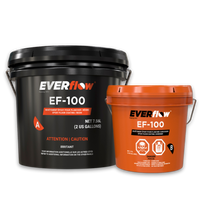
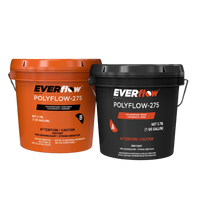
If the floor has to reopen fast, Everflow EF-290 recoats in 2 to 4 hours, takes foot traffic in 3 to 6 and vehicles in about a day at 68 degrees F. EF-275 and EF-301 aliphatic polyurethane are the other clear wear coats we stock.
Protection
How to protect an epoxy floor from scratches
- Walk-off mats at every entrance. Most grit comes in on shoes and tires. Clean under the mats too.
- Felt pads under furniture and non-marking casters on carts.
- Lift, do not drag. Steel shelving, jack stands and tool chests gouge a floor when pulled. Put plywood under jack stands and kickstands.
- Let a new floor cure. Most coatings we sell list a full cure of about 7 days at 68 degrees F on the data sheet. Hold off on harsh chemicals and heavy wet cleaning until then, and park on mats if tires come in hot.
A smooth gloss floor is fine dry and slick with water, oil or soap film on it. Read why is my epoxy floor slippery before adding anything.
Commercial floors
Commercial epoxy floor maintenance programs
On a commercial floor the cleaning program decides how long the finish lasts.
- Auto-scrubbers do the work. A neutral cleaner from a dosing system, cleaned and picked up in one pass, keeps residue off the floor.
- Soft pads on gloss. White or red pads on a gloss topcoat, never stripping pads. A soft brush deck often cleans a flake or textured floor better.
- Match texture to the cleaning method. Coarse anti-slip texture and hand mopping do not get along. Machine-scrubbed floors can carry more.
- Plan the recoat. The wear coat is consumable. Refresh the busy lanes before they wear through to the build coat.
Kitchens and wash-down areas have their own rules: see commercial kitchen flooring, auto shop floor coating, warehouse floor coating and commercial epoxy flooring.
Repair, recoat or replace
When cleaning is not enough
The question is whether the coating is still firmly bonded to the concrete. If it is, you recoat. If it is not, it comes off.
| What you see | Usual answer | Read more |
|---|---|---|
| Dull, scratched wear coat, sound underneath | Abrade and recoat the topcoat | Epoxy over old epoxy |
| Yellow or amber cast in daylight | Usually a light-stable recoat | Turning yellow |
| White haze on top that washes off | Clean, change the cleaner | Turning white |
| White bloom under the film | Remove, test the slab, rebuild | Turning white |
| Chips at doorways and joints | Local repair if the rest passes a scrape test | Chipping |
| Slick when wet | Fix in place with texture | Slippery |
| Lifting in sheets | Remove | All epoxy floor problems |
Small chips can be filled with EF-135 crack filler before a recoat. Full removal is a job for floor grinders and diamond tooling.
Lifespan
How long does an epoxy floor last?
Our garage epoxy buying guide puts it at 10 to 20 years for a properly prepped 100% solids epoxy with a quality topcoat in a garage, and a few years for a thin water-based kit over poor prep. Prep, slab moisture, film thickness, sunlight and traffic decide more than the resin does.
Common questions
Epoxy floor cleaning questions
What is the best way to clean epoxy floors?
Dust mop first to get the grit off, then wet mop with a pH-neutral floor cleaner at the label dilution, then rinse with clean water. On commercial floors an auto-scrubber with a soft pad does it in one pass.
Can you use vinegar or a steam mop on epoxy floors?
Not as routine. Vinegar is an acid and repeated use dulls the topcoat. Steam puts the floor through heat cycling, which is one of the ways coatings let go. Rooms that need steam or hot wash-down need urethane cement.
How do I clean an epoxy floor without streaks?
Use less cleaner and more rinse water. Streaks are almost always cleaner that was never rinsed. Mop, go over the floor again with clean water only, and squeegee it dry.
How do you remove tire marks from an epoxy garage floor?
Surface scuffs come off with a diluted degreaser and a stiff nylon brush. Yellow-brown patches exactly where tires sit are plasticizer from hot tires in the surface, and need light abrasion or a new topcoat.
How do you make an epoxy floor shine again?
Wash a test patch with warm water and rinse twice. If the shine comes back, it was residue. If it stays dull, the wear coat is worn: abrade the floor and apply a fresh polyaspartic or polyurethane topcoat.
When should an epoxy floor be recoated?
When the topcoat is dull, scratched or yellowed and cleaning does not bring it back, but the coating is still firmly bonded. If it is lifting or peeling, it has to come off first.
How long does an epoxy floor last?
A properly prepped 100% solids epoxy with a quality topcoat can last 10 to 20 years in a garage. A thin water-based kit over poor prep may last a few years.
Redoing the floor
Everything for the recoat or the next floor
Topcoats, build coats, flake, crack filler, grinders and tooling, stocked in Pompano Beach. UPS Ground is free on orders over $150.
Speak to a coatings expert
Not sure if it needs a mop or a recoat?
Latux Epoxy
2201 N Andrews Ave, Suite 108
Pompano Beach, FL 33069
(800) 413-1427
Monday to Friday, 8:00 AM to 5:00 PM.
Saturday by appointment.
Sunday closed.